How to Turn Abandoned Visitors Into Email Subscribers (Even Without a Sale)
Most stores only capture emails at checkout. Here's how to build a list from every visitor who engages — even the ones who don't buy.
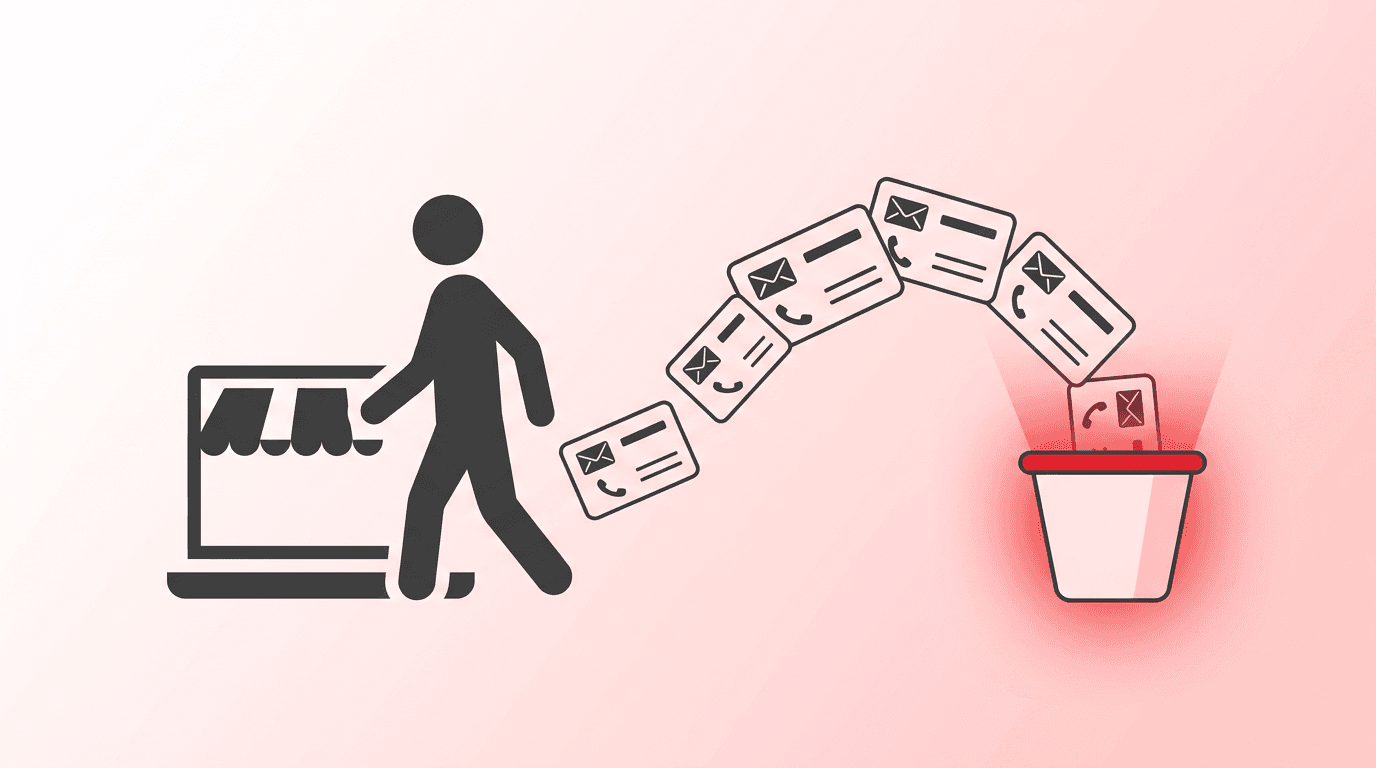
97% of Your Visitors Leave Without Buying. Are You Capturing Their Contact Info?
Here's the uncomfortable math: roughly 97% of visitors to your Shopify store leave without purchasing. If you're only collecting emails at checkout or through a newsletter popup, you're building your marketing list from the 3% who already converted. The other 97% vanish — along with any chance of bringing them back.
Most stores know they should be capturing more leads. But the standard playbook — a "10% off your first order" popup — has serious limitations. It only works on visitors willing to hand over their email for a discount they may never use. And it tells you nothing about what the visitor actually wanted or what price they'd pay.
There's a better approach: capture contact information during the shopping experience itself, from visitors who are actively engaging with your products. Every offer submitted through Lury — accepted, countered, or declined — collects an email, phone number, and name. That's a lead capture mechanism baked into the buying intent, not bolted on as an interruption.
The Problem With Traditional Lead Capture
About 70% of Shopify stores use discounts as their primary lead capture tool. The standard approach: show a popup, offer 10–15% off, collect an email. It works — sort of.
Blume, a self-care brand, captures roughly 5% of visitors with their discount popup. That's considered a strong result. But think about what that means — 95% of visitors either close the popup, ignore it, or never see it at all.
The deeper issue is what you capture. A newsletter signup gives you an email and nothing else. You don't know what product the visitor was interested in, what price they'd consider fair, or how close they were to buying. You have a name on a list with zero purchase-intent context.
The Lead Quality Gap
Not all leads are equal. A visitor who signed up for a generic 10%-off popup might have been casually browsing. A visitor who submitted a $75 offer on a specific $100 product just told you three things:
- Exactly which product they want
- The price they're willing to pay
- That they were engaged enough to actively negotiate
That's a fundamentally different lead — and it requires a fundamentally different follow-up strategy.
How Offer-Based Lead Capture Works
When a visitor submits an offer through Lury, they provide their email, phone number, and name as part of the offer form. This happens naturally — the customer isn't being asked to "sign up." They're engaged in a transaction, and providing contact info is a logical step in that process.
The critical insight: this data is captured on every offer, including declined ones. A visitor whose $50 offer on a $100 product was declined still gave you their full contact information, the specific product they want, and the price they'd pay. That's not a dead lead — that's a future customer waiting for the right moment.
What You Capture vs. Traditional Methods
- Newsletter popup: email only, no product or price intent
- Cart abandonment: email (if they reached checkout), product info, listed price
- Lury offer: email, phone, name, specific product, their price point, and whether the offer was accepted, countered, or declined
The richness of that data changes everything about how you can follow up.
Building Segments From Offer Data
Once you're collecting offers, you can build targeted segments that no newsletter popup could ever create. Here are the most valuable ones:
The "Almost Bought" Segment
Visitors whose offers were countered but who didn't complete the purchase. These shoppers were close — they engaged, negotiated, and received a counter-offer. Something stopped them (price was still too high, needed to think about it, got distracted). This is your highest-intent unconverted segment.
The "Price-Sensitive Shoppers" Segment
Visitors whose offers were declined because they fell below your floor price. These people want your product but not at your current price. When you run an actual sale, a seasonal promotion, or a clearance event, this is the first group you should notify. They've already told you the price that works for them.
The "Won Deal" Segment
Customers who submitted an offer, got it accepted, and completed the purchase. These are repeat-purchase candidates with a demonstrated preference for negotiated pricing. They're likely to come back and make offers on other products, especially if you're adding new inventory to your offer-enabled collections.
Connecting Leads to Your Email and SMS Flows
Capturing the data is step one. The real revenue comes from automated follow-up sequences in Klaviyo, Mailchimp, Omnisend, or whatever email platform you're running. Here's how to structure flows for each segment.
Declined Offer Flow (The Price-Sensitive Win-Back)
This is the flow with the highest upside because it targets shoppers you would have lost entirely without offer-based capture. According to recovery data, roughly 45% of cart recoveries happen within the first two hours after abandonment — so timing matters.
- Email 1 (1–2 hours after decline): "We couldn't accept your offer on [Product], but here's something you might like." Suggest similar products in their price range, or tease an upcoming sale.
- Email 2 (24 hours): Social proof — reviews of the product they offered on, best-seller badges, or customer photos. Reinforce value without discounting.
- Email 3 (72 hours or next sale event): If the product goes on sale or you adjust the floor price, notify them directly: "Good news — [Product] is now closer to your price."
Countered-but-Not-Converted Flow
These shoppers were this close. They saw a counter-offer and didn't take it. The follow-up should be lighter — they already know the price, they just need a reason to act now.
- Email 1 (1 hour): Reminder that their counter-offer is still available (if you set time-limited codes). Create urgency without pressure.
- Email 2 (24 hours): Highlight low stock, shipping speed, or a satisfaction guarantee — address whatever objection might have stopped them.
Welcome Series for New Offer Leads
Regardless of offer outcome, every new contact should enter a welcome sequence. Best practice is 3 emails over 5 days:
- Day 1: Brand introduction — who you are, what you stand for, what makes your products different
- Day 3: Social proof and bestsellers — let your happy customers do the selling
- Day 5: First-purchase incentive or invitation to browse new arrivals
Why Multi-Channel Recovery Matters
Email alone recovers an estimated 3–5% of abandoned carts. Adding SMS to the mix pushes recovery rates to 10–15%. That's a 2–3x improvement from a single additional channel.
Because Lury captures phone numbers alongside emails, you can run true multi-channel recovery flows from day one — no separate SMS capture popup needed. Most stores have to run a second lead capture campaign just to collect phone numbers. With offer-based capture, you get both in a single interaction.
SMS Best Practices for Offer Follow-Up
- Keep it short: "Hey [Name], the [Product] you offered on is now available at a lower price. Check it out: [link]"
- Time it right: SMS within the first hour of a declined offer has the highest open rate. Don't send SMS at midnight.
- Respect frequency: 1–2 SMS messages per offer event maximum. SMS is high-attention, high-annoyance — use it surgically.
- Always include an opt-out: Compliance isn't optional.
The Numbers: Offer Capture vs. Traditional Popups
Let's compare the two approaches for a store getting 10,000 monthly visitors.
Traditional newsletter popup (5% capture rate):
- 500 emails captured per month
- No phone numbers
- No product or price intent data
- Generic follow-up sequences
- Discount code given upfront (potential margin erosion on full-price buyers)
Lury offer capture (on engaged product-page visitors):
- Every offer = email + phone + name + product + price point
- Segmented by offer outcome (accepted, countered, declined)
- Targeted follow-up based on actual willingness to pay
- Single-use discount codes — no leakage, no sharing
- Multi-channel recovery (email + SMS) from a single capture event
The two approaches aren't mutually exclusive — you should run both. But offer-based capture fills a gap that no popup can: it captures intent-rich leads from shoppers who are actively considering a purchase, not just passively browsing.
Quick-Start Checklist
Here's how to start turning abandoned visitors into subscribers this week:
- Install Lury and enable "Make an Offer" on your highest-traffic product pages or collections.
- Set floor prices that match each collection's margin profile. Not sure where to start? Our guide to pricing strategies breaks down the options.
- Enable exit-intent popups — this catches visitors who are about to leave without submitting an offer. A last-chance "Name your price before you go" prompt recovers visitors who otherwise disappear forever.
- Connect your email platform — export Lury leads to Klaviyo, Mailchimp, or your platform of choice. Build the three flows outlined above: declined offers, countered-not-converted, and welcome series.
- Set up SMS flows for declined and countered offers using the phone numbers captured. Start with one message per event and measure response rates before scaling.
- Review weekly — check which products generate the most offers, which price points appear most frequently, and which follow-up emails drive conversions. Adjust your floor prices and email copy based on real data.
Every Offer Is a Lead — Even the Declined Ones
The shift in thinking is simple but powerful: stop treating declined offers as dead ends. A declined offer is a visitor who told you what they want and what they'll pay. That's more information than 99% of your traffic will ever give you voluntarily.
Build your segments. Set up your flows. Let the offer data do the targeting that generic popups never could. The store that captures and nurtures 1,000 intent-rich leads per month will always outperform the one that blasts a coupon code to 5,000 anonymous email addresses.
Ready to capture leads from every visitor interaction? Start your free trial and begin collecting emails, phone numbers, and purchase intent from day one. Every plan includes a 14-day free trial, with plans from $4.99/mo.
Related Articles
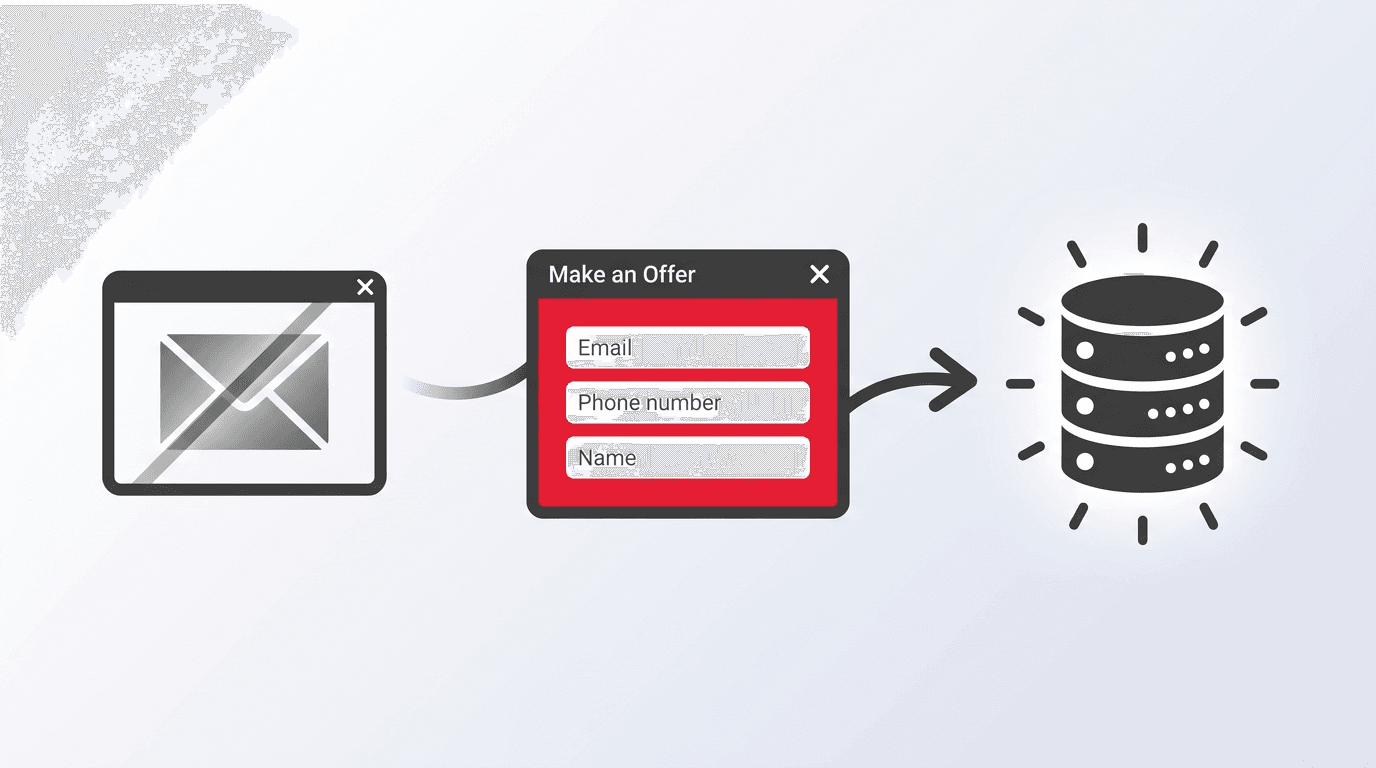
Lead Capture Beyond the Newsletter Popup: 3 Strategies Shopify Merchants Are Missing
Most Shopify stores rely on newsletter popups for leads. Discover 3 strategies that capture higher-intent leads with richer data.
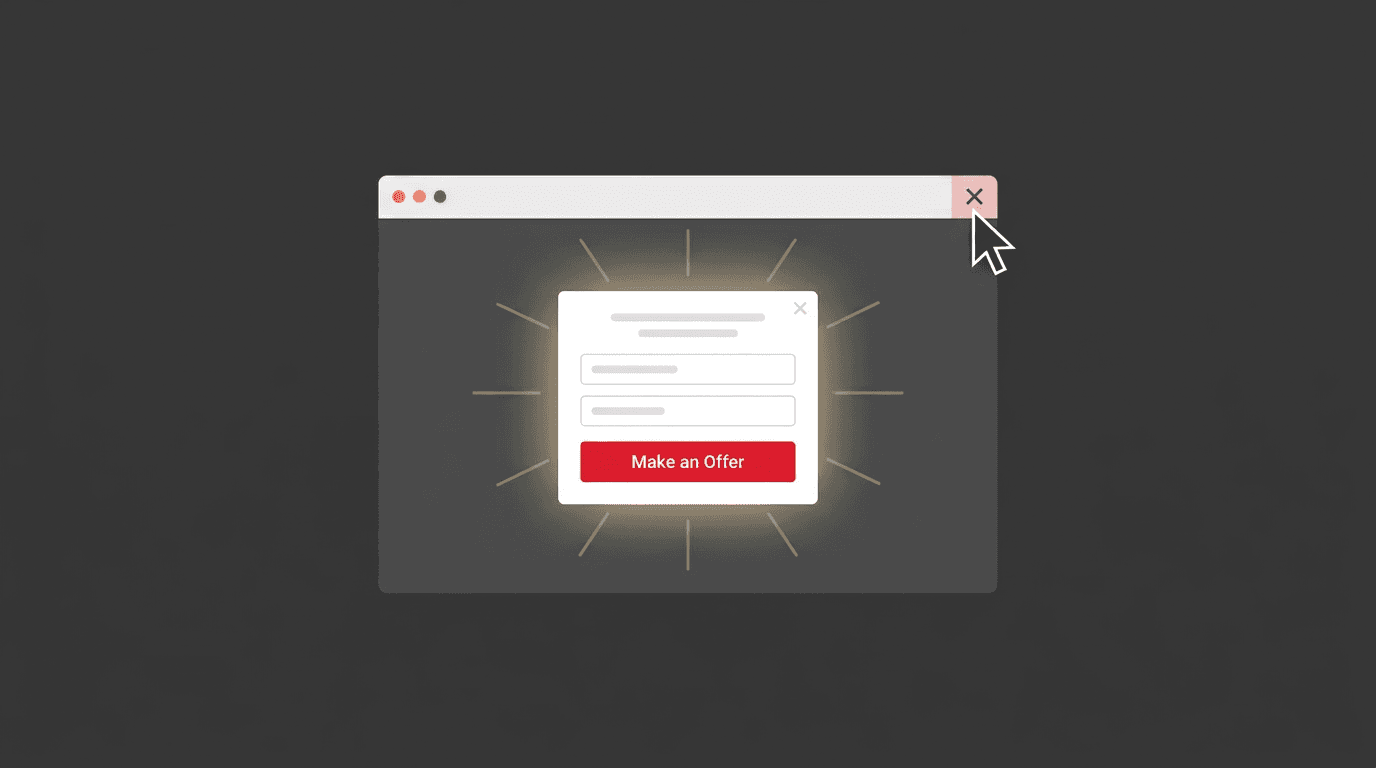
How Exit-Intent Offers Recover Abandoned Revenue
Learn how to configure Lury's exit-intent popup to catch leaving visitors and turn last-second bounces into real orders.
5 Pricing Strategies That Turn Price-Sensitive Shoppers Into Buyers
Stop losing customers to sticker shock. These five Lury strategies help you capture revenue from shoppers who want your product but hesitate at full price.