The $18 Billion Cart Abandonment Problem: What the Data Says About Price Sensitivity
70% of online carts are abandoned — and price sensitivity is the #1 reason. See the latest data and how make-an-offer pricing recovers lost revenue.
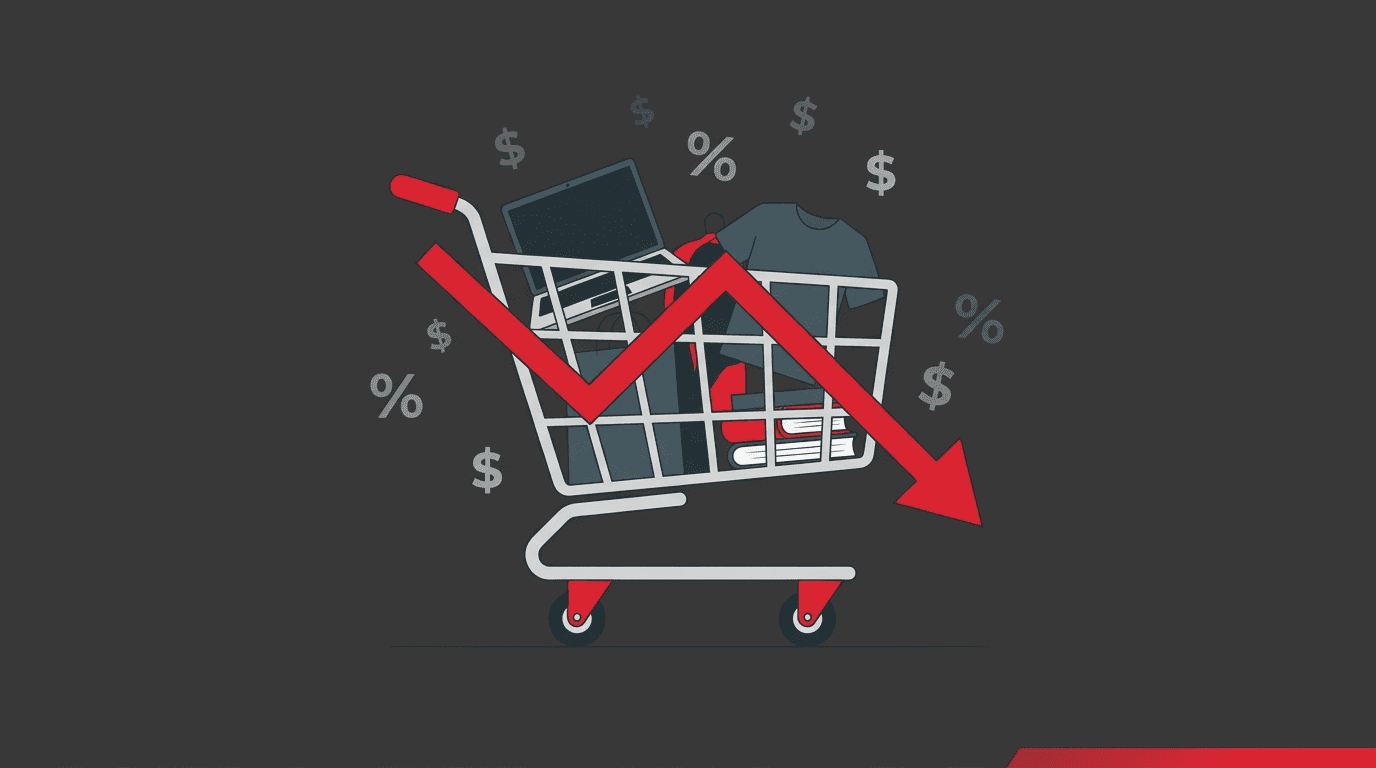
The Numbers Are Staggering — and Getting Worse
If you run a Shopify store, roughly seven out of every ten shoppers who add a product to their cart will leave without buying. That's not a guess — it's a 70.22% average cart abandonment rate calculated across 50 independent studies by the Baymard Institute.
Across the US alone, that translates to an estimated $18 billion in lost revenue every year. And globally, the trend is accelerating — Statista data shows abandonment hit 78.77% in August 2025, suggesting the problem is getting worse, not better.
But here's the part most merchants miss: the majority of those abandoned carts aren't lost to bad UX or slow shipping. They're lost to price sensitivity. And that's a problem you can actually solve — without slashing your margins across the board.
Why Shoppers Abandon: The Data Breakdown
Baymard's research breaks down the top reasons shoppers abandon their carts. The results are clear — price is the dominant factor:
- 39% — Extra costs too high (shipping, taxes, fees)
- 21% — Delivery too slow
- 19% — Didn't trust the site with payment info
- 19% — Account creation required
- 18% — Checkout too complex
Notice the pattern. The #1 reason — by a wide margin — is sticker shock. The shopper wanted the product. They added it to their cart. Then they saw the total and thought: "Not at that price."
The next four reasons are friction-related, and they matter. But price sensitivity is nearly twice as common as any other abandonment driver. If you only optimize checkout flow without addressing price perception, you're ignoring the biggest lever you have.
What Shopify Stores Specifically Face
Shopify merchants actually outperform the broader e-commerce industry — slightly. Shopify-specific abandonment rates sit between 67% and 70%, about 2–3 percentage points better than the cross-industry average. Shopify Plus stores fare a bit better still, landing in the 64–68% range thanks to optimized checkout experiences.
But let's put those "better" numbers in perspective. Even at 67%, you're losing two-thirds of potential buyers. For a store doing $50,000 a month, that's over $100,000 in potential revenue walking out the door — every single month.
And conversion rates paint the same picture. The average Shopify store converts at just 1.4%. Top performers hit 4.7%, but most merchants are nowhere close. That gap between 1.4% and 4.7% represents an enormous opportunity — and much of it comes down to recovering price-sensitive shoppers who were interested but not at the listed price.
The $260 Billion Recoverable Opportunity
Here's where the data gets interesting. Baymard estimates that $260 billion in lost orders across the US and EU are recoverable through better checkout design and conversion optimization. That same research points to a 35.26% potential increase in conversion rate if stores address the primary friction points — including price perception.
That's not aspirational marketing copy. It's based on usability research across thousands of checkout experiences. And when 39% of abandonment is price-driven, a significant chunk of that recoverable revenue comes from giving shoppers a reason to stay when the price feels too high.
The question isn't whether there's revenue to recover. It's how you recover it without training customers to expect discounts.
Traditional Recovery Tactics — and Where They Fall Short
Most Shopify merchants use a handful of standard tools to fight abandonment:
- Abandoned cart emails — effective, but only after the shopper has left. Recovery rates typically range from 5–10%.
- Sitewide discount codes — popular but dangerous. They erode margins, train customers to wait for sales, and leak to coupon aggregators within days. (More on that in our piece on the hidden cost of blanket discounts.)
- Free shipping thresholds — helpful for the "extra costs" segment, but irrelevant to shoppers who think the product itself is overpriced.
- Urgency tactics (countdown timers, "only 3 left!") — can boost conversions short-term, but don't address the underlying objection.
None of these tactics address the core issue: the shopper wants the product but has a different price in mind. Abandoned cart emails try to re-engage them after they've left. Discount codes give away margin to everyone — including shoppers who would have paid full price. And urgency tactics pressure without solving the actual objection.
Why "Make an Offer" Directly Solves the #1 Abandonment Driver
Think about how price sensitivity actually works in a shopper's mind. They see a product at $89. They'd buy it at $69. The store's margin is healthy down to $59. In a traditional setup, there's no mechanism to bridge that gap — so the shopper leaves and both sides lose.
"Make an offer" changes the dynamic entirely. Instead of a take-it-or-leave-it price, you give the shopper a way to say: "Here's what I'd pay." Smart rules evaluate the offer instantly — auto-accepting at or above your floor, countering reasonable bids, and declining lowball offers. The shopper feels heard. You protect your margins. And the sale closes.
This isn't theoretical. It's the same psychology that makes eBay's "Best Offer" feature one of their highest-converting mechanisms, and it's why the psychology of name-your-price consistently outperforms static pricing for considered purchases.
Catching Them Before They Leave
Timing matters. If you only offer price negotiation as a static button, some shoppers will still bounce before engaging. That's why exit-intent detection is critical.
The data supports this: exit-intent popups convert at 17.12% on average according to OptiMonk data. When you combine exit-intent timing with a "make an offer" prompt — rather than a generic "wait, here's 10% off!" popup — you're addressing the actual objection at the exact moment it matters most.
We break this down in detail in our guide to exit-intent offers.
Every Offer Is a Lead
Here's a benefit that doesn't show up in standard abandonment recovery metrics: lead capture. Every offer submission — whether accepted, countered, or declined — captures the shopper's email, phone number, and name.
Think about what that means for a store with 70% cart abandonment. Even the shoppers you decline become contacts in your CRM. You now have a warm lead who expressed intent to purchase, along with the exact price they were willing to pay. That data is gold for remarketing — whether through email flows, SMS campaigns, or future promotions targeted to their price sensitivity.
Compare that to a standard popup that offers "10% off for your email." The make-an-offer approach captures more data (price willingness, product interest, contact info) and creates a more engaged interaction. For more on this, see our piece on how to turn abandoned visitors into email subscribers.
The Margin Protection Problem
The biggest fear merchants have about flexible pricing is margin erosion. If you let people name their price, won't everyone lowball you?
In practice, no — and the data explains why. Most shoppers don't offer $5 for a $100 product. They offer $75 or $80 — a modest discount that feels like a win for them but preserves your margins. The distribution of offers tends to cluster close to the listed price, not at the bottom of the range.
More importantly, with floor-price controls, you define the absolute minimum you'll accept per product. Anything below that gets declined automatically. There's no risk of giving away product below cost — the system enforces your boundaries while creating the perception of flexibility.
And because every accepted offer generates a single-use discount code, there's zero leakage. The code works once, for one customer, on one order. It can't be shared on Reddit, scraped by Honey, or posted on RetailMeNot. Your negotiated price stays between you and the shopper.
What the Data Says You Should Do Next
Let's tie the numbers together:
- 70%+ of your carts are being abandoned, and price sensitivity is the #1 reason
- $260 billion in lost orders across the US and EU is recoverable
- Exit-intent popups convert at 17%+ — even higher when they address the actual price objection
- The average Shopify store converts at 1.4%, leaving massive room for improvement
- 35%+ conversion rate gains are achievable by addressing primary checkout friction
The merchants who will capture this opportunity aren't the ones blasting sitewide discount codes or adding another urgency timer. They're the ones who let price-sensitive shoppers engage on price — while protecting every point of margin with smart rules and single-use codes.
Start Recovering Abandoned Revenue Today
If 39% of your lost carts come down to price sensitivity, the answer isn't to ignore the objection or to discount indiscriminately. It's to open a conversation — and let smart automation handle it at scale.
Lury takes minutes to set up and offers a 14-day free trial on every plan, starting at $4.99/mo. Just a smarter way to turn "too expensive" into "sold."
Related Articles

Four Tariff Regimes in One Year: Protecting Margin When Your Landed Cost Won't Sit Still
US import tariffs changed four times in 2026. Here's why a static sitewide discount is a risky answer, and what a per-product price floor does differently.

Make-an-Offer Apps in Mid-2026: A Storeleads Market Snapshot
An updated look at the Shopify make-an-offer category since our February overview — who's growing, who's gone, and where the new entrants are.

Coupon Fatigue in 2026: Why Shoppers Are Tuning Out Sitewide Sales
Discount burnout is real and measurable in 2026. See the data on why blanket sales are losing their pull — and what shoppers say they want instead.